the NR group development professionals     


TREMKIT: the detection of fish-borne trematodes

Client: EU Commission DG Research FP5 funding.
Ian Watson: Project Co-ordinator under contract to the Natural Resources Institute, 2002 - 2006.

The TREMKIT consortium comprises Natural Resources Institute (UK), Mangalore College of Fisheries (India), University of Khon Kaen (Thailand), Institute for Parasitic Diseases, Shanghai (China) and University of Duesseldorf (Germany). Additional support is provided by FAO. The project Virtual Office is based on the FAO oneFish internet portal and can be found at http://www.onefish.org . Details of the project and progress will be posted on the public pages of the Virtual Office.

The TREMKIT project will develop diagnostic tools for the detection of opisthorchid fish-borne trematodes. Two approaches are being taken. One is to develop a monoclonal antibody (MAB) based detection for detection primarily of infection in humans. It is anticipated that the sensitivity of this method will be high, but cross-reaction between trematodes species may not enable differentiation. The second approach will be based on the polymerase chain reaction (PCR) which is capable of detecting very small amounts of trematodes DNA in all of the parasite's life stages. It is envisaged that this will be capable of detecting very low levels of infection which tend to be overlooked by current methods. The PCR kit should be capable of detection of trematode eggs in faeces, metacercariae in fish and possibly cercariae in snails. The PCR test is likely to be too expensive for use as a mass screening tool, but does offer a means of precise diagnosis and will be especially important in epidemiological studies.

TREMKIT will contribute to the better understanding of the biology of pathogens (specifically trematodes), the design of more effective control strategies and more accurate diagnosis. The primary objective of this project is the development of rapid, accurate and reliable tools for the detection of key life stages of fish-borne trematodes. The development of the tools will enable epidemiological studies to be conducted to determine the extent and severity of infestation in the peoples of the target Asia. In addition, by allowing easier and more accurate detection of trematodes before they infect humans, the tools will assist in the identification of key points in the chain of infection, and thus in the identification of possible control measures.

Current microscopy-based methods for the detection of fish-borne trematodes are time consuming and require considerable skill on behalf of the operator to be able to isolate and identify the parasites to species. Low level infection in humans may be undetected, increasing the risk of reinfection in the area. The use of enzyme-linked immunosorbent assays (ELISA) based on MAB offers detection at lower levels of infection, but may not differentiate trematodes at species level. However this is not important for an effective anthelminthic treatment to be administered as the same treatment will control all three species. Polymerase chain reaction (PCR) based methods in contrast do have greater potential for differentiation of trematode species which is essential for epidemiological studies.
Trematode eggs in faeces
Eggs in faeces
Reducing the chance of infection is important to any control strategy. For the parasites in question (Opisthorchis viverrini, O. felineus and Clonorchis sinensis), the route of infection for humans is via raw or insufficiently cooked fish products. The vector responsible for infecting fish is snails. A PCR-based detection tool would enable a better understanding of the pathways of infection by identifying key host species and infection reservoirs. This is crucial to the development of control strategies based on minimising the level of infection in fish populations.
Trematodes from liver
Trematodes recovered from the liver

It is believed that 9 million people are infected with fish-borne trematodes in SE Asia, with a further 20 million are thought to be infected with C.sinensis in China. Health problems related to fish-borne trematodes are frequently misdiagnosed and the true burden on the population is under-reported. Studies indicate that morbidity rates from fish-borne trematode infection are high and that the impact on human health, the ability to work and thus on the local economies of Asia are significant. The death rate attributable directly to fish-borne trematode infections is not known, but it is known to be linked to the fatal cancer, cholangiocarcinoma, which is prevalent in Asia. NE Thailand has the highest death rate from this cancer in the World with annual age standardised rates of 135.4 and 43.0 per 100,000 for males and females respectively. This is far higher than for other parts of Thailand where Opisthorchis infection is rare. In addition to the developing country impact, rising levels of infection have been noted in ethnic communities in developed countries, including within the EU, due to increasing trade in fresh fish and improved access of communities to ethnic foods.

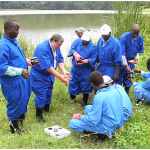
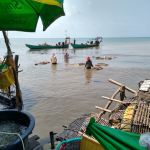
Aquaculture, Chi River, Thailand
Aquaculture in Chi River,
Thailand

The development of reliable and accurate tools for the diagnosis of fish-borne trematode infections in humans and for the detection of early life stages in fish will both serve as a means for better health care through targeting individuals for treatment. It will also function as a research tool for the identification of key vectors for the parasites and critical control points for reducing infection. The tool will be an important aid in assessing the efficacy of current and future strategies for the prevention of fish-borne trematode infections and in the design of treatment programmes for affected areas.

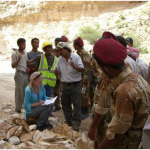
Sources of infection
Sources of infection by fish-borne trematodes, Laos PDR
In the longer term, the availability of a diagnostic tool which can detect metacercariae (a larval stage of trematodes) in fish will allow research to be conducted on production and post-harvest procedures which can reduce or eliminate the risk of transmission to human consumers. Effective prevention of infection will not only improve human health, but will also lessen the costs for those most vulnerable and least able to obtain medical treatment. The rural poor in Asia are most affected by the parasite burden; being most susceptible to infection through the consumption of raw of under-cooked fish and being least able to afford the necessary medical care for prophylaxis and the treatment of acute cases, the cost of which is estimated at US$ 19.4 million per annum in Thailand alone.
Latrine built over fish pond
Latrine built over fish pond,
Southern China


Page last updated June 26, 2008